the setup
Back in 2021, GMX Blueberry Club launched into an ecosystem that barely existed. Arbitrum was still early. OpenSea didn't even list Arbitrum-native collections yet. Most of the tools we take for granted today weren't there.
I was already active in the GMX and Arbitrum space before GBC. When the project started, I got involved as a contributor. Over time, the work kept building, and I ended up on the core team. Nothing was planned that way. It just happened through what was getting done.
The intent was twofold from day one. GBC was meant to be a blue chip NFT collection on Arbitrum, at a moment when there wasn't really a blue chip standard on the chain yet. And it was meant to be the connective tissue for the GMX community. A place where holders of the protocol could form a shared identity, share culture, and eventually govern together as a DAO.
The two goals fed each other. The NFT gave the community a visible artifact. The community gave the NFT its meaning. Everything we built on top over the next three years came back to that original bet: build something worth owning, for people who already believed in the protocol underneath.
gbc-nftsbuilding the wearables layers
In 2021–2022, GBC built the Blueberry Lab Items. A layer of wearable NFTs that holders could equip on their character. Lab Flasks, GLP Shirts, Fast Food Caps, Summer Buoys. Some free for holders, some minted, some tied to real-world events. Each one an independent NFT that lived on Arbitrum and traded on Stratos, then Trove.
It was one of the earliest wearables systems on Arbitrum at a time when almost nothing like it existed on the chain. The tooling wasn't there. The marketplaces weren't ready. The user habits weren't formed. The project had to figure a lot of it out as it went.
At that stage, I wasn't leading the product on GBC. I was advising the founder, weighing in on decisions and thinking through them alongside him. On the execution side, most of the delivery ran through my design studio, seemStudio. One of my partners was focused on GBC while the other partner and I ran the client work that funded the whole setup. My contribution to GBC in that period was closer to a sparring partner than a driver: helping shape how the items fit together as a coherent line, how drops and rarities were sequenced, and how the dapp made the whole thing feel like a system rather than a series of standalone releases.
The interesting design problem wasn't the items. It was the layer around them. A wearable only makes sense inside a system that gives it a place. Where does it sit relative to the character. How does it show up in someone's wallet. How does it look on secondary markets that weren't designed for this kind of layered NFT in the first place. Those were the conversations I was in.
By the time the system matured, the pattern of holders equipping items, trading them, and treating the collection as an evolving identity had become part of the GBC culture. It gave the community a reason to keep engaging with the collection beyond the initial mint.
gbc-dapp-wearablessurviving the bear
2023 was the year the market went quiet. Most NFT projects didn't make it. For GBC, the choice was clear: keep the community engaged with real activity, not with promises.
That meant shipping through the winter. New Blueberry Lab Items kept dropping. IRL events and community gifts kept the relationship warm at a time when most projects had gone silent. The narrative work stayed constant too. We kept anchoring the collection in GMX culture, in the DAO idea, in the sense that GBC was still going somewhere.
GBC Trading kept scaling in parallel. A trading competition on GMX where a share of the rebates was redistributed to the best-performing traders in the community. It gave holders a weekly reason to trade under our banner, and aligned the collection with the protocol underneath in a concrete way. Beyond a collection identity, GBC was becoming a working piece of infrastructure for the GMX community.
That's the period I moved into the core team. Not a promotion, more a natural extension of what I was already doing. The scope grew because the team needed it to.
By the end of 2023, GBC had crossed 4,000 holders. In a year when most collections lost half their community, we'd grown.
gbc-nftparis-2023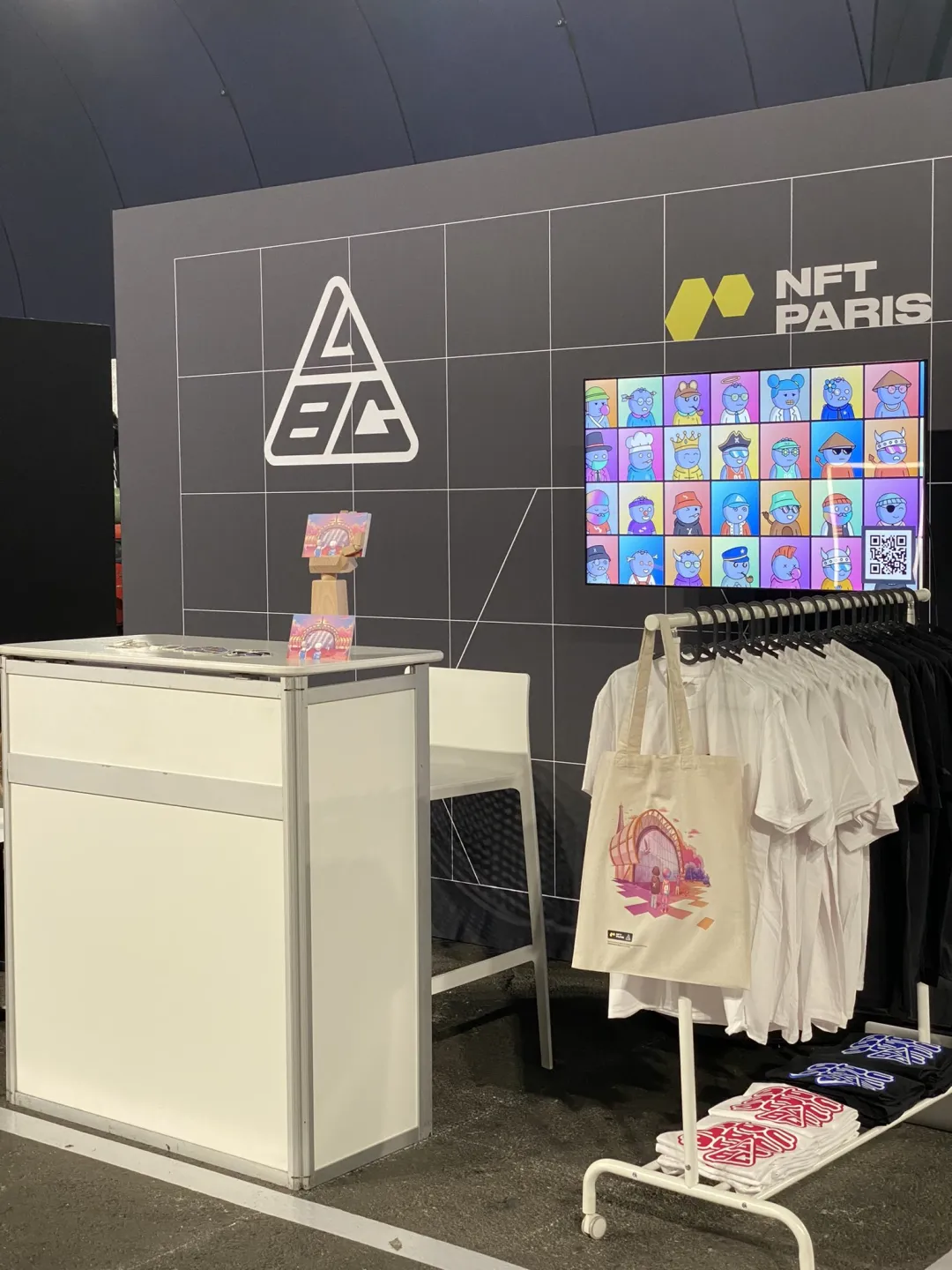
backed by arbitrum
In February 2024, GBC received a grant from the Arbitrum Foundation to support future initiatives and grow the NFT ecosystem on Arbitrum. It came after months of preparation, from the initial application to the projected costs and roadmap we'd laid out. Beyond the funding itself, the grant was external validation. Arbitrum was placing a bet on GBC as a project worth backing.
That capital changed what was possible. It let the team accelerate on ideas that had been sitting in the roadmap waiting for the resources to ship. New team members came on. The website and applications got a full overhaul. And most importantly, it made room to build a proper loyalty layer for the community.
By late 2024, that layer took the shape of GBC Camp. A Learn-to-Earn system with quests, courses, and rewards, designed to onboard new users into crypto, NFTs, and DeFi through GMX as the entry point. Monthly trading competitions ran on top of it, with a $25,000 cashprize pool and additional rewards for top performers. The infrastructure worked. The rewards were real. The building blocks were solid.
But the community didn't pull on it the way we expected. Holders liked the identity, the culture, the wearables. They weren't as interested in a structured loyalty layer, even one with real money attached. Gamifying DeFi mechanics wasn't the reward they were looking for.
That reading is what pushed the team toward a different bet a few weeks later. If the community wasn't going to engage with a gamified layer built for them, maybe the value had to be generated for them directly, by something running in their name. That thought is what became $KUDAI and Kaigen.
gbc-dapp-2024what gbc taught me
I left GBC after Kaigen shut down. Three years in, walking away wasn't a light call, but the reasons were about that chapter, not about the project itself. GBC is still moving, and the work I take with me is real.
What I take from it:
- Contribute early without a mandate. Show up, carry weight, and let the scope catch up to the work. That's the only way to grow inside a project still figuring itself out.
- Navigate a bear without breaking the community. Engagement isn't sustained by promises, it's sustained by shipping. Keep the community watching you build.
- Design product inside an ecosystem, not next to one. A product doesn't exist in isolation. Its shape is defined by how it connects to everything around it.
- Treat the community as a real product stakeholder. Not users to serve, not a marketing channel. Part of the product loop, giving signal, reshaping decisions along the way.
- Build over years, not sprints. What matters isn't shipping fast. It's shipping in a direction the project can hold for a long time.
I don't design the same way after these three years. The next projects I take on will carry what GBC taught me, whether the brief looks like it or not.